
UAE–Nigeria CEPA unlocks tariff-free trade, services access and stronger investment ties
 supriyatunk
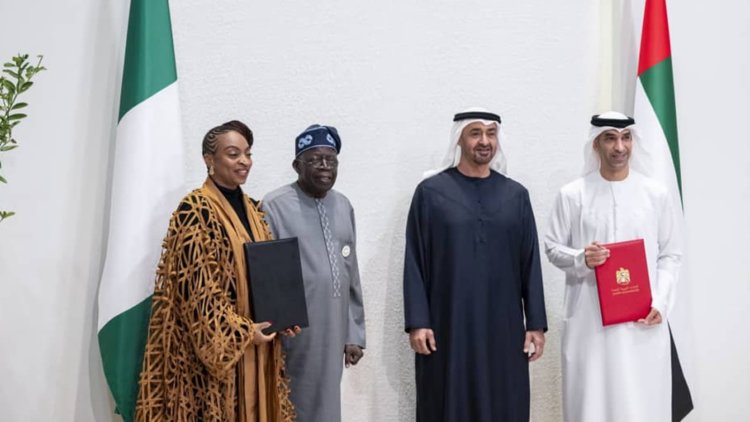
The United Arab Emirates and Nigeria have taken a major step toward deepening bilateral economic ties with the signing of a Comprehensive Economic Partnership Agreement (CEPA), a deal designed to eliminate trade barriers, expand services access, and boost long-term investment confidence between the two economies.
The agreement marks a significant reset in relations following the resolution of earlier diplomatic challenges and comes amid rapidly growing non-oil trade between the two countries.
Tariff elimination on thousands of products
Under the CEPA, the UAE will eliminate tariffs on more than 7,300 products imported from Nigeria, opening wider access for Nigerian exports across multiple sectors. In return, Nigeria will remove tariffs on approximately 6,200 UAE products, with a strong focus on industrial inputs, machinery, and capital goods, a move aimed at supporting Nigeria’s domestic manufacturing and infrastructure ambitions.
Expanded access to service sectors
The agreement provides extensive market access for services, reflecting the growing importance of non-goods trade. Nigeria has committed to opening 99 service sectors, while the UAE has offered access across 108 service sectors, covering areas such as logistics, professional services, finance, technology, and business support.
Easier business mobility
Business travel and talent mobility form a key pillar of the CEPA. Nigerian business visitors will be able to enter the UAE for up to 90 days within a 12-month period, significantly easing short-term commercial engagement. Corporate executives and specialists will also be eligible to relocate under renewable three-year visas, supporting deeper operational presence and knowledge transfer.
Economic impact and trade growth
The agreement is projected to add $2.4 billion to the UAE’s GDP by 2032, underlining its strategic economic importance. It builds on a sharp rise in bilateral non-oil trade, which reached $4.3 billion in 2024, representing a 55% year-on-year increase.
Boosting investor confidence
Beyond trade, the CEPA establishes a clearer and more predictable legal framework aimed at encouraging UAE investment into Nigeria’s productive sectors. Priority areas include agriculture, technology, and large-scale infrastructure, such as the Lagos–Calabar coastal road project, positioning Nigeria as a key destination for long-term Gulf capital.
A renewed partnership
The pact follows the resolution of earlier diplomatic hurdles, including the resumption of UAE visas for Nigerians in 2024 and the restoration of Emirates Airline flights to Nigeria, signaling a renewed phase of cooperation and trust.
With tariffs reduced, services liberalized, and mobility improved, the UAE–Nigeria CEPA is set to redefine economic engagement between the two countries and strengthen South–South trade at a time of global economic realignment.