The fashion moments that defined 2025: from scandals to style history
 supriyatunk
2025 proved that fashion is no longer just about clothes. It’s about moments, the kind that turn into memes, spark outrage, dominate timelines, and spill into global cultural conversations faster than a viral TikTok.
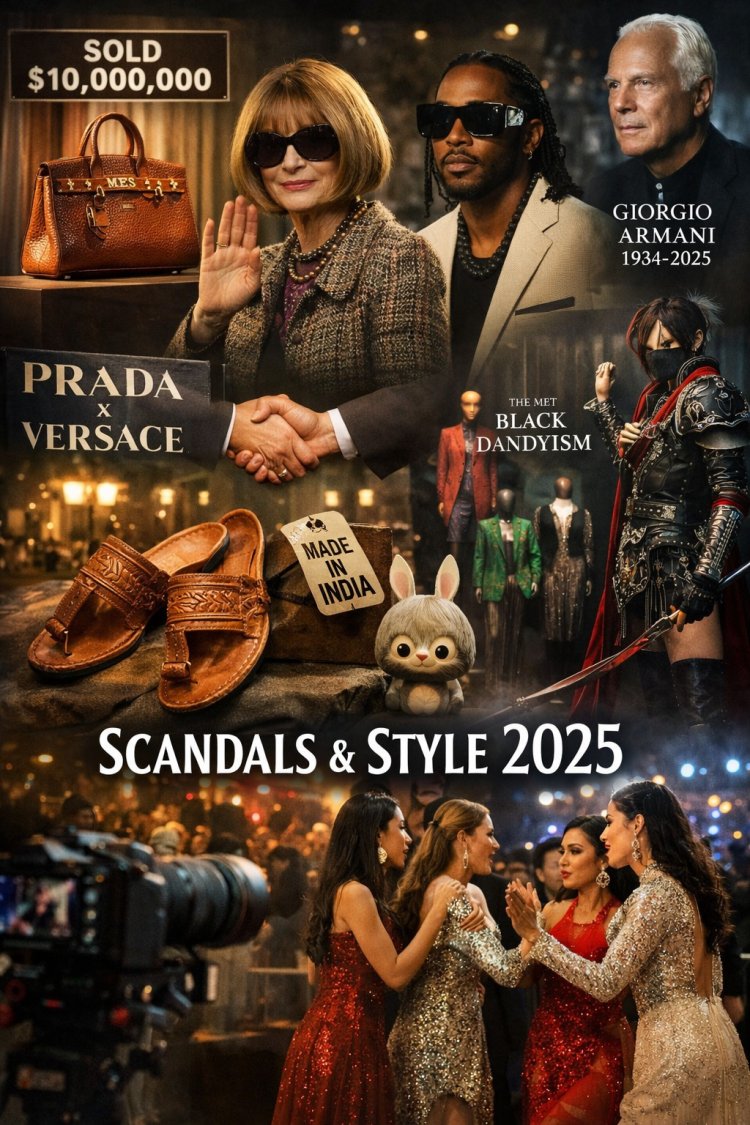
One week delivered a record-breaking Birkin auction; the next, a K-pop stage costume became Halloween’s most copied look. Luxury brands were held accountable, heritage craftsmanship finally received overdue recognition, and playful accessories turned into serious cultural currency. Fashion wasn’t confined to runways this year; it lived on feeds, in debates, inside museums, and across headlines.
Celebrities, designers, editors and even collectors shook the industry, reminding us that style isn’t only about what you wear, but how it intersects with culture, power, identity and, occasionally, chaos. Whether you followed fashion obsessively or casually scrolled for the drama, 2025 delivered moments that were unforgettable, absurd, and unmistakably of their time.
The Kolhapuri Prada row
Prada found itself at the centre of one of the year’s biggest fashion controversies when Kolhapuri-style leather sandals appeared on its runway without credit to the Indian artisans behind the centuries-old craft. The backlash was swift and global, calling out cultural appropriation and intellectual property erasure.
What followed marked a rare industry pivot. Prada travelled to Kolhapur, signed an MoU with local leather associations, and announced a limited “Made in India” collaboration. The episode forced luxury fashion to confront how inspiration, heritage and accountability intersect, proving that in 2025, doing right mattered as much as looking good.
The original Birkin shatters records
When the original Birkin bag sold for a staggering $10 million, it wasn’t just an auction; it was a cultural spectacle. Livestreams, social media commentary, and memes followed the sale like a sporting event.
The moment cemented handbags as historical artifacts, investment assets, and ultimate status symbols. In 2025, luxury wasn’t only worn; it was collected, archived, and flexed as cultural capital.
The death of Giorgio Armani
The passing of Giorgio Armani at 91 marked a sobering pause in a year driven by virality. Armani’s legacy of quiet tailoring, restrained elegance, and understated power stood in stark contrast to fashion’s louder trends.
Tributes flooded runways and timelines, reminding the industry that true influence doesn’t always shout. In 2025, his death underscored the enduring power of legacy in an attention-driven era.
Labubu takes over fashion
The rise of Labubu dolls was one of 2025’s most unexpected fashion obsessions. Ugly-cute, chaotic and playful, the collectible dangled from designer handbags and popped up in street style across fashion capitals.
In a season dominated by clean lines and muted palettes, Labubu became the anti-aesthetic proof that fashion still has room for humour, mess, and personality. By mid-year, owning one wasn’t just cute; it was cultural shorthand.
Anna Wintour steps down from Vogue
After 37 years, Anna Wintour stepping down as editor-in-chief of American Vogue sent shockwaves through fashion’s power structures. Her influence shaped not just magazines but also careers, trends, and entire cultural narratives.
Social media erupted with tributes, memes, and speculation, signalling a broader shift away from singular gatekeepers. In 2025, fashion authority felt more decentralized and more contested than ever.
Prada Group acquires Versace
Prada Group’s €1.3 billion acquisition of Versace instantly became fashion’s most debated business move. Minimalist restraint meeting maximalist glamour sparked excitement, skepticism, and endless online theorizing.
Beyond balance sheets, the deal captured imaginations, highlighting how luxury conglomerates are reshaping heritage brands while feeding the culture’s appetite for reinvention.
K-pop’s Demon Hunter costumes go viral
A single K-pop stage outfit became 2025’s Halloween blueprint. The dramatic Demon Hunter costume inspired thousands of recreations, from thrifted DIY versions to elaborate cosplay.
The moment reaffirmed pop culture’s dominance over runways, blurring lines between fandom, fashion, and performance. In 2025, viral energy was a trend-setting power.
Kendrick Lamar revives bell-bottoms
Kendrick Lamar proved that one look can reset fashion memory. His appearance in Celine bell-bottoms triggered instant virality, reviving a silhouette many had written off.
Searches spiked, memes followed, and bell-bottoms re-entered the style conversation, showing that celebrity influence still holds weight, even in an algorithm-driven world.
The Met explores Black Dandyism
The Met Costume Institute’s exhibition on Black Dandyism stood out as one of the year’s most meaningful cultural moments. Celebrating elegance, resistance, and identity across African and African-diasporic communities, the show went beyond spectacle.
Critics praised its depth and storytelling, reinforcing the idea that museums now rival runways in shaping fashion discourse.
The Miss Universe debacle
What should have been a polished celebration unravelled into one of 2025’s messiest fashion-pageant moments. The Miss Universe orientation in Thailand erupted into walkouts, confrontations and viral footage following a heated clash involving Mexico’s Fatima Bosch and Thai pageant director Nawat Itsaragrisil.
Reigning Miss Universe Victoria Theilvig publicly supported Bosch, later addressing the media through tears with a message that resonated widely: women should uplift each other. The incident cracked the glossy facade of pageantry, exposing the human tensions beneath the glamour.
The takeaway
Fashion in 2025 wasn’t just worn; it was debated, dissected, and deeply felt. From accountability and legacy to virality and chaos, the year proved that style remains one of culture’s most powerful mirrors.