Saudi Arabia’s Red Sea Project Emerges as First Proving Ground for Foreign Property Ownership
 Ashwini Gambo
Saudi Arabia’s flagship Red Sea development is rapidly becoming the first real-world test of the Kingdom’s newly liberalised foreign property ownership regime, with international buyers already completing transactions just weeks after the rules came into force.
According to Abdullah Al Ajaji, CEO of Driven Properties, overseas investors have begun purchasing residential units at the Red Sea, marking a significant shift in how global capital can access Saudi real estate.
“We’re already seeing buyers move from interest to execution,” Al Ajaji said, pointing to early deals completed under the Kingdom’s new unified framework that allows non-Saudis to own property in designated locations.
New ownership law reshapes access
The change follows the implementation of the Law on Non-Saudis’ Ownership of Real Estate, which came into effect this month and replaces regulations dating back to 2000. The new legislation permits foreign individuals and companies to own residential, commercial, industrial and agricultural assets in areas approved by the Council of Ministers, based on recommendations from the Real Estate General Authority.
Although the government has yet to officially publish the list of eligible zones, major state-backed developments particularly the Red Sea are widely expected to be among the first opened to international ownership.
Red Sea sets the pace
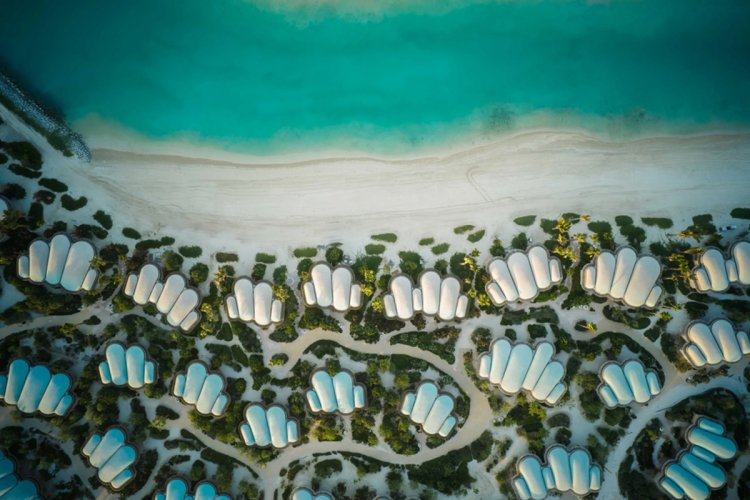
Developed by Red Sea Global, the Red Sea destination is one of Saudi Arabia’s most advanced giga-projects. Spanning roughly 28,000 square kilometres along the Kingdom’s north-western coastline, the development includes more than 90 islands and is positioned as a luxury tourism and lifestyle hub.
Plans call for 50 resorts by 2030, offering around 8,000 hotel rooms and more than 1,000 residential homes. Phase one is already underway, with five resorts operational since late 2023, including Six Senses Southern Dunes, Nujuma, a Ritz-Carlton Reserve, and Shebara, owned and operated by Red Sea Global.
Shura Island, the heart of the destination, is scheduled to see additional resort openings through 2025. Key infrastructure including Red Sea International Airport and Shura Links, Saudi Arabia’s first island golf course is already in operation.
Market access opens for brokers
For international brokerages, the reform represents a structural change. Al Ajaji noted that Driven Properties, active in Saudi Arabia since 2019, previously faced limitations due to a market dominated by Saudi-only transactions and developer-led sales.
“That system made it difficult for external brokers to scale,” he said. “Now, with government-backed developers, we’re seeing mandates for international sales.”
Many Red Sea homes exceed the SR4 million threshold required to qualify for Saudi Arabia’s premium residency programme, which grants long-term residency to foreign property owners.
“Activating premium residency is often one of the first conversations buyers want to have after closing,” Al Ajaji added.
Who is buying and why
Early demand patterns vary by region. Investors from South and Southeast Asia have moved more quickly into completed purchases, while buyers from Europe, the US and Russia have tended to take longer to evaluate pricing and risk.
The Red Sea offering differs from Saudi Arabia’s primary residential markets, particularly Riyadh, where supply is focused on housing demand driven by employment growth.
“This is not a mass housing play,” Al Ajaji said. “The Red Sea is about second homes, lifestyle assets and long-term value.”
Saudi real estate boom continues
The foreign ownership reform comes amid one of the world’s largest development pipelines. Since 2016, Saudi Arabia has announced approximately $1.3 trillion in real estate and infrastructure projects, with $164 billion in contracts awarded by September 2024, according to Knight Frank.
More than 1 million residential units are expected to be delivered nationwide by 2030. Riyadh remains the most active market, with apartment prices up around 75 percent since 2019 and villa prices rising roughly 40 percent over the same period.
Transaction volumes rose over 40 percent year-on-year in 2024, although price growth has moderated due to affordability pressures in parts of the market.
Rules remain tightly controlled
Under the new law, foreign residents may also own one personal residence outside designated zones, excluding Mecca and Medina. Non-residents are restricted to ownership within approved areas once announced.
All foreign transactions must be formally registered and are subject to Saudi Arabia’s real estate transfer tax. Violations may result in fines or compulsory disposal of the property.
Al Ajaji noted that several early buyers have ties to the UAE, including investors already familiar with Dubai’s property market.
“They’re not new to the region,” he said. “They understand regulated international real estate environments.”
For now, the Red Sea stands out as the clearest example of how Saudi Arabia’s foreign ownership reforms are beginning to take shape.
“It’s controlled, limited and scarce,” Al Ajaji said. “That’s exactly why it’s attracting attention so early.”