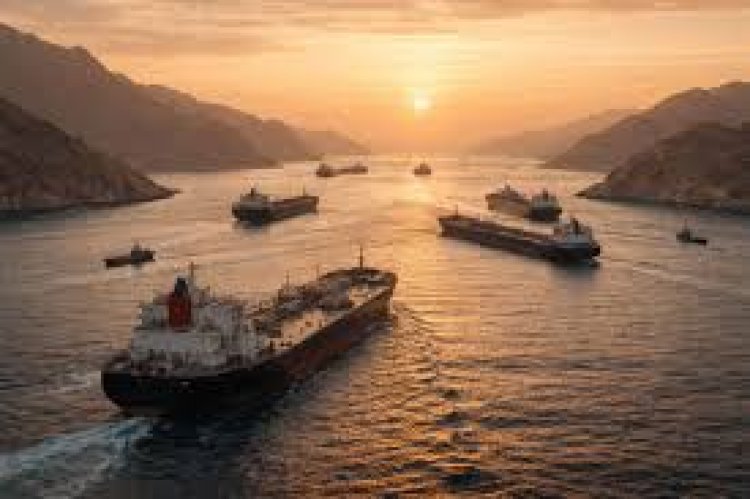
Amid escalating tensions in the Middle East, Iran has opted to keep the strategically vital Strait of Hormuz selectively open, providing partial relief to global trade and energy markets.
Iran’s Foreign Minister Abbas Araghchi confirmed that vessels from countries including India, Russia, China, Pakistan, and Iraq will be allowed safe passage through the crucial maritime corridor.
He clarified that the strait has not been fully closed, but restrictions are being applied selectively. Ships linked to the United States, Israel, and their allies may face denial of passage, reflecting the ongoing geopolitical standoff.
The Strait of Hormuz is one of the world’s most critical oil transit routes, handling nearly 20 percent of global oil and gas shipments. Any disruption in this passage has immediate implications for energy markets, shipping routes, and global supply chains.
Officials indicated that several India-linked vessels have already successfully transited the Strait in recent days, suggesting that coordination mechanisms between Tehran and certain countries are functioning effectively despite the tense environment.
Analysts view the move as part of Iran’s broader strategy to maintain pressure on its adversaries while avoiding a complete shutdown that could trigger severe global economic repercussions. By keeping the route partially operational, Iran appears to be balancing geopolitical leverage with economic realities.
The development has brought cautious optimism to global markets, even as uncertainty persists. With tensions still high, the situation remains fluid, and any further escalation could impact the flow of energy supplies through this critical maritime chokepoint.

 supriyatunk