Troy Kotsur on Horror, Inclusion, and Why His New Film Primate Belongs in Movie Theatres
 Ashwini Gambo
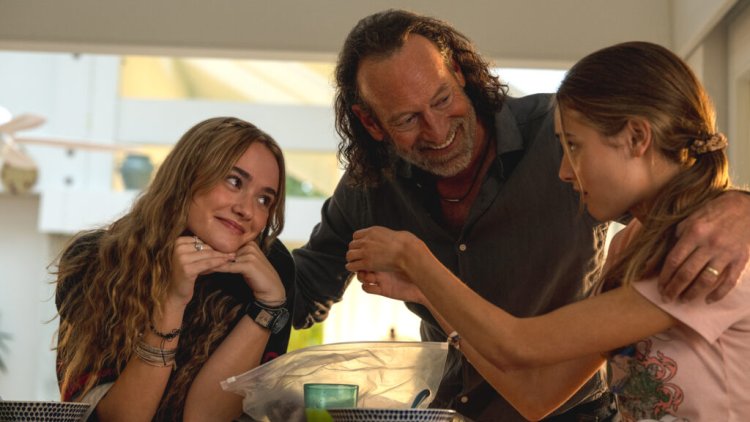
Oscar-winning actor Troy Kotsur has a unique relationship with horror films: he can’t hear the screams and that’s precisely why he enjoys them. Born deaf, Kotsur says the thrill of horror isn’t about sound design or jump-scare audio cues, but about watching the audience react in real time.
“I see people shaking, covering their eyes, jumping out of their seats,” he shared animatedly through sign language. “That reaction is the movie for me.”
Kotsur stars as the father of two teenagers in Primate, a creature-feature horror film directed by Johannes Roberts. He believes the film is perfectly suited for theatrical release, especially in regions like the UAE, where cinema remains a communal ritual rather than a solitary pastime.
“Horror is one of the last genres that truly needs a shared space,” Kotsur said. “It doesn’t work the same way alone.”
That sentiment is echoed by co-star Johnny Sequoyah, who plays Lucy. For her, the magic of horror lies in collective fear.
“There’s something special about sitting with strangers and people you love, all holding your breath together,” she said. “When I’ve watched Primate with an audience, people scream, shout, even talk back to the screen. Someone actually yelled, ‘Kill the chimp!’ It turns into a ride.”
Primate centres on a family who make the fatal mistake of treating a chimpanzee named Ben as a pet rather than a wild animal. What begins as companionship slowly devolves into terror as Ben’s instincts resurface, turning a seemingly safe home into a dangerous environment.
For Kotsur, the project stood out not just for its thrills, but for how naturally it accommodates both deaf and hearing audiences without turning accessibility into a message.
“Historically, deaf audiences have been isolated from the full experience,” he explained. “Here, deaf and hearing people feel the same emotions at the same time. That shared reaction matters.”
The conversation inevitably turns to the future of cinemas, amid growing concerns that theatres could become relics of the past. Sequoyah, whose film is debuting on the big screen, finds that idea unsettling.
“Theatres were my church growing up,” she said. “My parents were cinephiles. I don’t believe that experience will ever disappear.”
“Movies are storytelling,” he signed. “And storytelling is strongest when it’s experienced together.”
Primate makes no attempt to disguise itself as prestige cinema. It knows exactly what it is: a pulpy, adrenaline-fuelled creature feature designed to make audiences scream, laugh, and question the poor decisions of its characters.
“This isn’t a movie you overthink,” Sequoyah said. “You go in, you have fun, you scream. It’s cathartic.”
Beneath the chaos, the film raises a provocative question: who is the real villain the animal forced into an unnatural role, or the humans who believed they could control it?
“The film asks that,” Sequoyah noted. “But it’s also very clear about one thing: don’t keep pet chimps.”
Kotsur delivers the final twist with trademark dry humour.
“At first, I thought my daughter was the villain,” he signed. “She threw a wild party and destroyed the house. But then turns out it’s Ben.”Ben the chimp nearly steals the film, a classic risk when working alongside animals. Both actors agree the performance is convincing enough to make audiences forget he isn’t real.“That’s when it gets scary,” Kotsur said.