Sri Lanka Pitches Tax Holidays and ‘Next Dubai’ Vision to Attract UAE Investors
 Ashwini Gambo
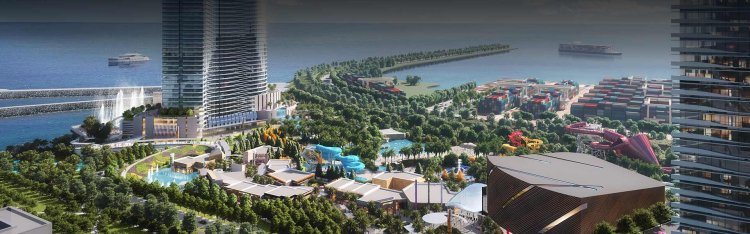
Sri Lanka is offering tax holidays of up to 15 years and positioning Colombo Port City as a future financial and trade hub as it seeks to attract investment from the UAE, banking on renewed political stability and ongoing economic reforms.
Deputy Minister of Industry and Entrepreneurship Development Chathuranga Abeysinghe said the government is streamlining investment approvals and incentives to make Sri Lanka a predictable and competitive destination for foreign capital. Speaking to Gulf News on the sidelines of the Invest Sri Lanka Investor Forum in Dubai, he said clarity and ease of doing business are central to the country’s new investment push.
“We have two broad investment opportunities – the Colombo Port City, which is being developed as a regional financial hub, and projects under the Board of Investment,” Abeysinghe said. “Some investments qualify for tax holidays of up to 15 years, along with other incentives. With the new Investment Promotion Act, all of this will be streamlined and made clearer.”
Why Middle East investors-
Abeysinghe said Sri Lanka’s political neutrality and expanding trade access make it an attractive base for Middle Eastern investors looking to reach global markets.
“Sri Lanka can trade and work with any country. We engage with China, the US, India and the Middle East,” he said, adding that the country’s neutral foreign policy provides access to major trade and investment corridors. Sri Lanka already benefits from preferential access to European markets and is pursuing additional trade agreements.
Key sectors in focus-
The deputy minister identified agriculture, tourism, ports and maritime logistics, and renewable energy as priority sectors for foreign investment.
“Agricultural transformation is a major opportunity, particularly in crops that are unique to Sri Lanka,” he said. “There is also strong potential in luxury tourism, especially for Middle Eastern travellers, as well as in ports and maritime investments that connect East–West trade routes.”
Renewable energy is another key focus, with opportunities in green hydrogen and long-duration energy storage, aligned with global sustainability goals.
Learning from the Dubai model-
On his first official visit to Dubai, Abeysinghe said Sri Lanka is looking to draw lessons from the emirate’s economic transformation.
“The trajectory is clear. Stability is in place and reforms are under way,” he said. “We talk about Vietnam, South Korea and India’s turnaround. We talk about how Dubai came up and next is going to be Sri Lanka.”
Stability and reforms-
Abeysinghe acknowledged that Sri Lanka lost growth momentum over the past three decades due to delayed reforms, policy inconsistency and corruption, but said conditions have changed since 2022.
“Our economy is now stable and predictable. Key reforms are being implemented, policies are consistent, and the legal framework for investment is being strengthened,” he said.
Sri Lanka has exceeded its fiscal and macroeconomic targets for 2024 and 2025, while land policy reforms and the digitisation of government services through GovPay are removing long-standing investment bottlenecks, he added.
“This is no longer a gamble,” Abeysinghe said. “Investors can be part of Sri Lanka’s growth journey as long-term stakeholders.”