Global Outrage as Iraq Passes Law Allowing Child Marriage From Age Nine
 Ashwini Gambo
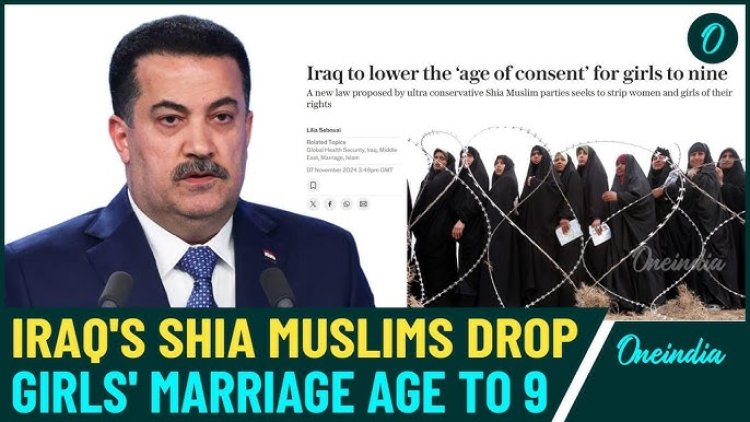
Iraq has ignited widespread international condemnation after Parliament passed amendments allowing girls as young as nine years old to be married, a move critics say marks a dramatic rollback of women’s and children’s rights in the country. The decision overturns key protections established under the 1959 Personal Status Law, which had set the legal age of marriage at 18 and was long regarded as one of the most progressive legal frameworks for women in the Middle East.
Human rights organisations, activists and international observers have warned that the amendments expose young girls to forced marriage, exploitation, physical harm and long-term psychological trauma. Campaigners argue that legalising child marriage strips girls of their right to education, health and personal autonomy, placing them at heightened risk of abuse and lifelong inequality.
Beyond marriage age, critics say the amendments significantly weaken legal safeguards for women, affecting rights related to divorce, child custody and inheritance. These protections, many note, were the result of decades of legal struggle and reform aimed at ensuring dignity and fairness for women within Iraqi society.
The 1959 law had long been seen as a cornerstone of women’s rights in Iraq, balancing religious considerations with civil protections. Its erosion, rights groups say, signals a broader shift that could undermine gender equality and social stability, particularly at a time when women and girls already face significant challenges.
The international community continues to speak out against the amendments, urging Iraqi authorities to reverse the decision and uphold commitments to international human rights conventions. Advocates stress that the greatest cost of the new law will be borne by girls and women, whose safety, futures and fundamental rights now hang in the balance.