CLIO Desert Park unveiled as Dubai prepares to host one of the world’s largest artworks
 supriyatunk

A spaceship-shaped cultural landmark linked by 10 kilometers of immersive artwork flowing through the desert is set to redefine large-scale public art in Dubai. Known as CLIO Desert Park, the ambitious project has been unveiled as a landmark cultural destination in the Margham desert, billed as one of the largest artworks ever conceived.
The vision was revealed during a launch event at Dubai Harbour Yacht Club, which drew an eclectic international audience. Global football legends including Roberto Baggio, Fabio Cannavaro, Francesco Totti, and David Trezeguet attended the unveiling alongside artists, actors, and cultural ambassadors such as Stefano Cecchi and Diego Granese, highlighting the project’s global cultural appeal.
Located across more than one million square meters at the VGPX+66 Margham Dubai, Dubai Desert SkyDive site, CLIO Desert Park will center around a monumental installation by internationally recognized contemporary artist Agron Hoti. The artwork will unfold across 25,000 authenticated modules, each measuring 2 meters by 2 meters, forming a continuous linear canvas stretching 10 kilometers in length and 10 meters in width.
At the heart of the development will be CLIO House, a circular, two-level cultural structure designed by architect Matteo Antonelli. Conceived as a futuristic “spaceship,” the venue will host exhibitions, artist residencies, talks, and collaborative cultural programs, positioning CLIO as both an artwork and a living cultural ecosystem.
Over a projected six-year period, CLIO Desert Park aims to welcome approximately 4.8 million visitors, including one million certifying participants, reinforcing Dubai’s growing reputation as a global hub for experiential art, culture, and innovation.
According to Massimiliano Suglia, CEO and Founder of CLIO Desert Park, the project’s ambition extends far beyond its physical scale.
“The message of the artwork is inclusion,” Suglia said. “We live in a world full of conflicts. Dubai shows how people from different countries and religions can live together with respect. Our goal is to create something that has never been done before, where the desert itself becomes part of the artwork.”
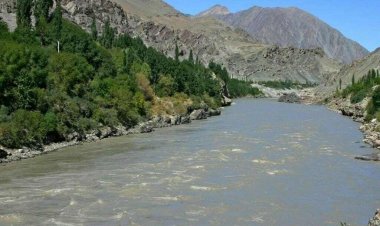
The installation’s canvas has been described as “a river inside the desert,” a metaphor echoed by Cinzia Pasquali, Restorer and Conservator on the project. She highlighted the technical challenges involved in preserving such an artwork in extreme desert conditions.
“It’s challenging to conserve the canvas in the desert because of heat, humidity, and ultraviolet exposure,” Pasquali said. “The materials, pigments, and synthetic fibers have been carefully selected to withstand the environment while preserving artistic expression.”
By transforming the desert into both medium and message, CLIO Desert Park represents a bold fusion of art, architecture, and landscape, one that aligns with Dubai’s broader vision of cultural innovation on a global scale.