
2026 to witness a rare quadruple eclipse lineup, including Europe’s first total solar eclipse in over 25 years
 supriyatunk
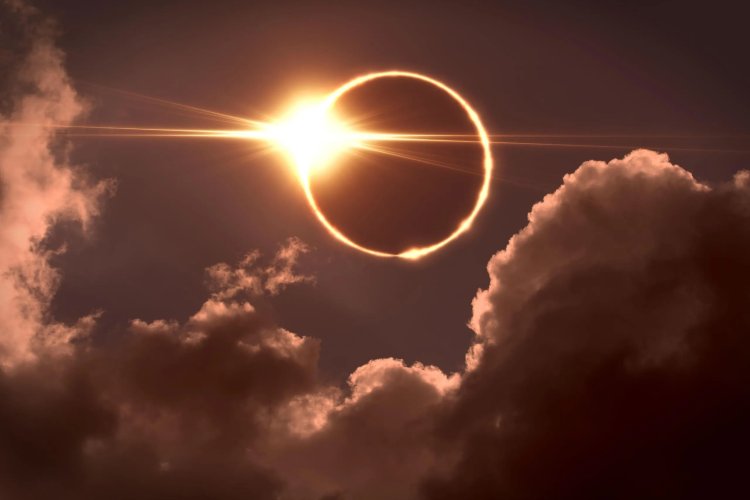
Skywatchers around the world are set for an exceptional celestial year in 2026, which will feature a rare quadruple lineup of major eclipses: two solar and two lunar events. The highlight of the year will be a total solar eclipse on August 12, marking the first total solar eclipse visible from mainland Europe in more than 25 years.
Together, these eclipses will span nearly the entire calendar year, offering astronomers and enthusiasts multiple opportunities to witness dramatic interactions between the Sun, Moon, and Earth.
Solar eclipses in 2026
The first solar event of the year will be an annular solar eclipse, commonly referred to as a “Ring of Fire,” on February 17, 2026. During this phenomenon, the Moon will cover the central portion of the Sun but will appear slightly smaller, leaving a bright ring visible around its edges.
The annular phase will be best observed from Antarctica, while a partial eclipse will be visible across southern South America, southern Africa, and parts of the Indian Ocean.
The most anticipated event follows on August 12, 2026, when a total solar eclipse will occur. During totality, the Moon will completely block the Sun, revealing the Sun’s outer atmosphere, known as the solar corona.
The path of totality will pass through the Arctic, Greenland, Iceland, and Northern Spain, making it a historic moment for European observers. A partial solar eclipse will be visible across most of Europe, North Africa, and northern North America.
Lunar eclipses in 2026
The first lunar event is a total lunar eclipse, or “Blood Moon,” scheduled for March 3, 2026. As the Moon moves fully into Earth’s shadow, it will take on a distinctive copper-red hue caused by sunlight filtering through Earth’s atmosphere.
This eclipse will be best viewed from North and South America, Australia, Eastern Asia, and the Pacific region. Notably, it will also be the last total lunar eclipse visible anywhere in the world until 2028.
Later in the year, a deep partial lunar eclipse will occur on August 28, 2026. Approximately 93 to 96 percent of the Moon will be covered by Earth’s shadow, giving it a dark, rusty-red appearance. The best views will be from North and South America, Europe, Africa, and the Middle East.
Visibility from India
For observers in India, celestial viewing opportunities in 2026 will be limited. Neither of the solar eclipses, in February or August, will be visible from the country.
However, the March 3 total lunar eclipse will be partially visible for a brief period in the evening from select regions, including New Delhi and Hyderabad. The August 28 lunar eclipse will not be visible from India.
A landmark year for eclipse watchers
With a rare combination of solar and lunar eclipses, culminating in a historic total solar eclipse over Europe, 2026 stands out as one of the most significant eclipse years of the decade. For scientists, photographers, and astronomy enthusiasts alike, the year promises unforgettable moments in the night and daytime skies.