UAE backs three global teams with $4.5 million to advance rain enhancement science
 supriyatunk
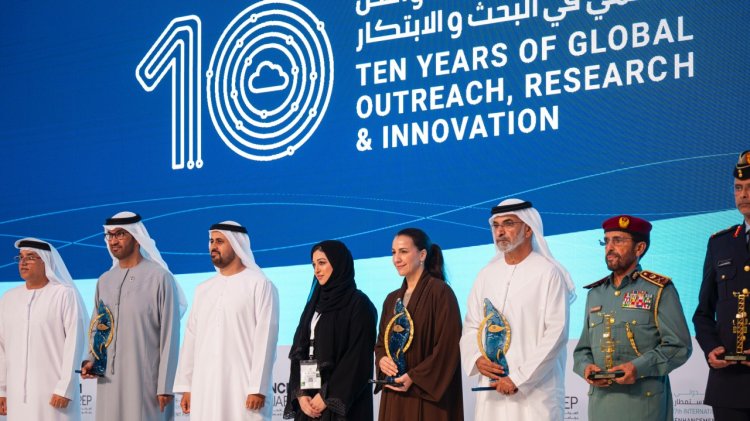
The UAE Research Program for Rain Enhancement Science has selected three international research teams to receive major funding, reinforcing the country’s long-term strategy to tackle water scarcity through advanced scientific innovation. Each winning project will receive up to $1.5 million (Dh 5.511 million) over the next three years, with grants announced today by the National Center of Meteorology (NCM) in Abu Dhabi.
The three projects represent distinctly different approaches to improving rainfall, ranging from artificial intelligence and nanotechnology to large-scale environmental engineering.
Dr. Dixon Michael from Colorado will focus on what happens inside clouds during seeding operations. Using artificial intelligence and dual-polarization radar, his research aims to precisely analyze cloud microphysics, replacing trial-and-error methods with data-driven evidence. The project is expected to identify which cloud seeding techniques work best and why, offering measurable insights that could refine future operations.
From Australia, Professor Linda Zou is developing next-generation cloud seeding materials using nanotechnology. Her team will design advanced particles engineered to enhance ice crystal formation more efficiently than existing materials. AI tools will be used to optimize particle performance, while specialized testing equipment will be installed at the National Center of Meteorology. The project also includes training UAE scientists, strengthening local research capacity alongside technological development.
The most unconventional approach comes from Dr. Oliver Branch of Germany, who is exploring whether rainfall can be encouraged by modifying the land itself. His research will test how terrain reshaping and changes in ground cover at strategic locations might naturally create atmospheric conditions favorable for rain. If successful, the concept could offer a longer-term, more permanent alternative to traditional cloud seeding.
Dr. Abdulla Al Mandous, President of the World Meteorological Organization and Director General of NCM, said the program reflects the UAE’s commitment to backing scientific innovation with substantial resources. He highlighted that the center provides awardees with advanced infrastructure and technical expertise rarely available elsewhere, enabling ambitious, real-world experimentation.
Competition for the grants was intense. Since applications opened in January 2025, the program has received 140 proposals from research teams worldwide. Only 16 teams advanced to the full proposal stage, with just three projects ultimately selected. Each winning team will receive up to $550,000 annually, giving researchers the financial runway to pursue complex, multi-year studies.
Alya Al Mazrouei, Director of the UAE Research Program for Rain Enhancement Science, noted that the benefits extend well beyond funding. Winning teams gain access to global scientific networks, decades of UAE meteorological data, and hands-on operational support, helping transform theoretical research into practical solutions that address critical water security challenges.
Together, the three projects underline the UAE’s ambition to remain at the forefront of rain enhancement science, combining global expertise with local infrastructure to explore new ways of securing water for the future.