
Qatar intercepts missile attack as foreign ministry warns escalation threatens region
 supriyatunk
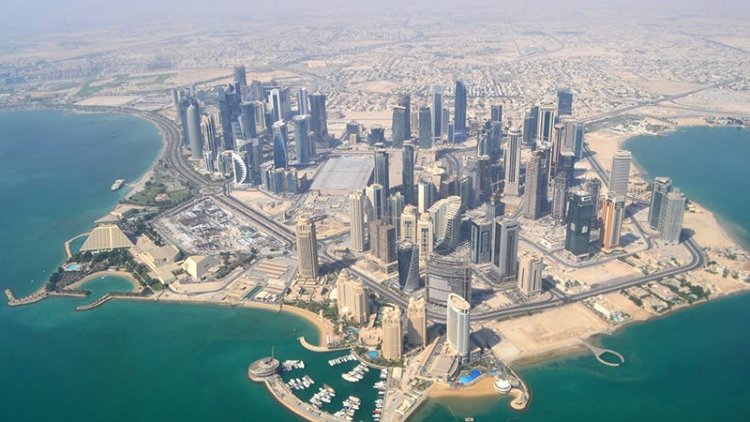
Qatar intercepted a missile attack targeting the country on Tuesday after loud explosions were heard across Doha and residents received a national emergency alert warning that the security threat level had been elevated.
Authorities confirmed that the missile was intercepted by the country’s armed forces as part of defensive measures taken amid heightened regional tensions.
Despite the security situation, limited repatriation flights continued to operate through a temporary air corridor at Hamad International Airport, allowing stranded travellers to enter or leave the country.
The Ministry of Interior Qatar also issued a warning to the public about scam calls exploiting the current regional crisis, urging residents to remain vigilant and rely only on official sources for information.
Qatar condemns attacks on vital infrastructure
During the weekly press briefing held in Doha, Majed Al-Ansari, adviser to the prime minister and official spokesperson for the Ministry of Foreign Affairs of Qatar, strongly condemned attacks targeting critical infrastructure across the region.
Al-Ansari stressed that any attacks on facilities essential to civilian life pose serious risks not only to the region but also to the wider world.
“Targeting vital infrastructure, whether it be water desalination facilities, water tanks, food reserves, medicine reserves, or medicine production facilities, any kind of infrastructure that sustains people’s lives is a grave danger for the people of the region and beyond,” he said.
He added that such actions must stop immediately, warning that the region cannot withstand further attacks on critical facilities.
Iran’s actions criticised
Al-Ansari also rejected justifications offered by Iran regarding recent attacks, stating that they represent a direct violation of Qatar’s sovereignty.
“We rebuke any justification that the Iranians are offering for these attacks. This is an attack on our sovereignty, an attack on our people, an attack on our economy, an attack on our infrastructure and vital infrastructure,” he said.
Global consequences of regional escalation
The spokesperson warned that attacks on energy facilities and disruptions to maritime navigation could have far-reaching consequences beyond the Middle East.
According to Al-Ansari, strikes on energy infrastructure and the blocking of key shipping routes could trigger economic ripple effects across global markets.
“The ripple effects of attacking the energy facilities in this region… will be felt across the world,” he said.
Sovereignty and international partnerships
Al-Ansari reaffirmed that no country has the authority to dictate Qatar’s diplomatic relations or the entities it chooses to host within its borders.
“No one in the world, including the Iranian foreign minister, has any say on Qatari sovereignty and who we choose to host in our country and what kind of diplomatic relationships we’re going to have,” he said.
He also emphasized the strength of Qatar’s strategic partnerships with international allies, including the United States, noting that cooperation with defense partners remains a key component of the country’s security strategy.
Warning of broader regional war
Al-Ansari said the current situation reflects long-standing warnings issued by Qatar regarding escalating tensions across the Middle East.
“You can put a map of the region in front of you, and you will not be able to find a finger-pointing space where escalation is not happening,” he said.
He added that the current developments represent what he described as the “biggest ‘I told you so,'" referring to earlier warnings that unchecked tensions since 2023 could eventually lead to a broader regional conflict.